Logging Logging On - Fall 2026
Christopher Andrews and Erin Kathleen Bahl, Editors
What a moment. We are excited and pleased to introduce the Fall 2026 30th Anniversary of Kairos: A Journal of Rhetoric, Technology, and Pedagogy. Our editorial staff has been working mightily over the last few months to bring this issue to life, and we are deeply appreciative of each person’s time, expertise, and service.
At the same time, we feel like we shouldn’t get much further into the column without stopping to address current events. All of us who are connected to the rhetoric and composition scholarly and teaching community are deeply affected by the sudden and misguided dechartering of the Conference on College Composition and Communication (CCCC) by the National Council of Teachers of English (NCTE) in late July, 2026. The senior team and staff at Kairos: A Journal of Rhetoric, Technology, and Pedagogy stand in solidarity with the leadership and members of CCCC and the College Composition and Communication editorial team, offer our deep appreciation for current and past leaders and volunteers with that organization, and will be here to do the work alongside the rest of the field as it invents the future. We also struggle to find words strong enough to express our disgust with NCTE’s announcements about the future of College Composition and Communication and the Studies in Writing and Rhetoric book series. To our editor colleagues in particular, we appreciate the difficult work ahead of you as you figure out the future of some of the most respected venues in the field. We see and value your service, and we thank you for it, and we’re here to help.
As an organization, CCCC has always been a vital space for teaching, scholarship, and service in composition, rhetoric, and writing studies, and while it’s unclear what the future will hold, I am confident that the leaders, whether elected or grass-roots, and people who made CCCCs great will pour heart and soul into ensuring that CCCCs 2.0—whatever it ends up looking like—will be just as amazing a space in its new independence.
While nearly everyone at Kairos will have their own CCCCs stories, we don’t have room for all of them here. Maybe a future PraxisWiki piece, heh! But here’s a quick memory on behalf of the journal: For about a decade, Kairos published CCCC conference session reviews each year and nearly all of these are still available and accessible on PraxisWiki. (Before 2007, the reviews were originally published by the now-archived Academic.Writing journal, which later became Across the Disciplines). Picking through the names of session review contributors is a walk down memory lane for both the journal and the conference. Down by the Creative Commons notice on the table of contents and copyright page of the 2016 edition is this note:
Reviews of the 2016 Conference on College Composition and Communication (held in Houston, TX, April 6–9, 2016) are solicited and developed independently of Kairos: A Journal of Rhetoric, Technology, and Pedagogy by the CCCC Reviews Coordinators. The views in these reviews may or may not reflect the views of Kairos editors (they probably do...), and reviews are published by Kairos as a service to the field. Enjoy!
It’s service all the way down. I (Chris) have been deeply—sometimes overmuch—committed to service as part of my professional life, and that, of course, includes service to the field. In my campus life as a department chair, I read paragraphs (and paragraphs and paragraphs) each year documenting the many and varied kinds of service faculty dedicate to their disciplinary communities, and it is continually amazing to hear about the massive hearts for service people can have—service often given in response to chilling and awful times in higher ed. Reading current and past conference leaders and attendees memorializing the conference and the organization over the last few weeks, I am staggered by the sheer number of hours of service to the field inspired by that organization. When an executive committee comes along and sweeps away the results of that labor with a vote and an email, it HURTS. It hurts to know that in an instant, your work might be gone, washed away. But as I look back at these spunky, thoughtful, session reviews, at the conference memories shared on Substack essays and Facebook posts, at the calls for organizing committees and meetups on Discord chats and email lists, I can still see hope. Times are bad. Conversations are being silenced. Journal editors keep having to introduce new issues with comments about how everything is, indeed, awful all the time. Lawsuits and firings and proactive overcompliance and legislative overreach and fear and closures and all of it. But I can still see hope. We have to.
Thirty Years of Kairos
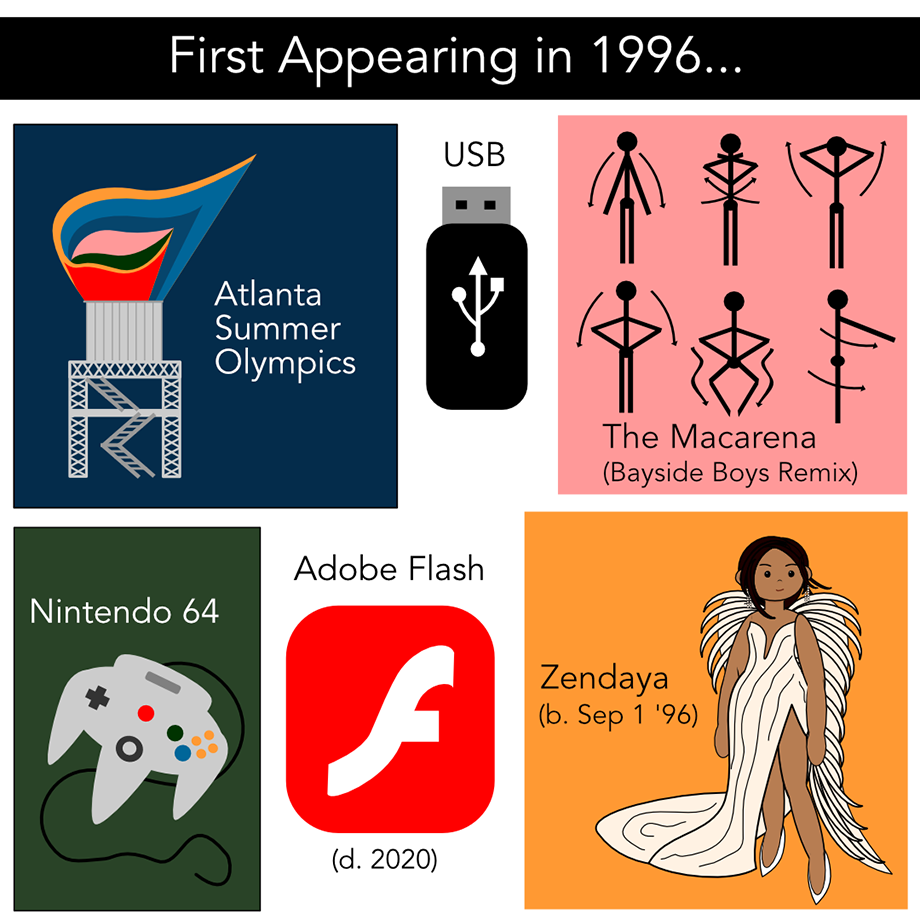
Anniversaries mean looking back and looking forward, and musing on what’s changed with the journal—to “commemorate how histories accumulate and fields change” (Cheryl Ball, Logging On column for 20.2). While all of our own plans for Kairotic world domination (™) are still very much in their infancy and not ready for forward-looking prime time, Chris and Erin did want to mark the occasion of the 30th with some special looks back. (We will gleefully remind Doug, with no apologies, that in Spring 1996, Chris was a junior in high school and Erin was just finishing kindergarten [oof!] — I refuse to acknowledge this as even a possibility, as it feels like I just joined the staff a bit ago myself! - DE)
CoverWeb
To commemorate Kairos’s 30th year, we put together a special retro-CoverWeb with a couple of important moving parts. First, we invited Kairos staff, authors, and board members to share either “three minutes of audio/video, 3 images, or 300 words” describing what the journal meant to each of them. We also included a complete listing of the staff members who have graced each masthead since Issue 1.1, along with all of our Special Issue guest editors. Finally, this CoverWeb features Cheryl Ball’s audio reflection on her Kairos era. We say it all the time, but we’ll say it again—we are deeply thankful to all the staff and community members who contributed something to this CoverWeb, and we are excited to see it come out!
Topoi & Inventio
Our three peer-reviewed webtexts in this issue each explore shared themes of hybrid genres, remix, and creative approaches that push back against traditional methods of knowledge construction (with a shoutout especially to inventive work first begun by graduate students!)
- In our Topoi feature, “WAVEFORMS: A Webtext Mixtape,” Brian Mooney constructs a digital exhibit of ten original music and spoken word compositions co-authored with students, inviting the audience to critically experience the sounds and literacies at the heart of youth poetry slams.
Our two Inventio webtexts emphasize how digital tools can (re)connect fragmented communities and networks, both highlighting projects pursued during the peak of the COVID-19 pandemic.
- In “Shaping Narratives: Exploring A Hybrid Documentary Methodology,” Kelli Lycke Donate reflects on creating short community-engaged documentaries featuring elderly residents of the former mining town of Santa Rita, New Mexico. These documentaries were collected into a website (or “film-book”) in tandem with unedited interviews and critical framing, with the Santa Ritians themselves as the primary audience.
- “Creative Destruction: A Pedagogical Process with the FrankenProject” takes us on a behind-the-scenes tour of a touch interface that generates glitchy remediations of Mary Shelley’s Frankenstein, created in collaboration between Calvin Olsen, Kelsey Dufresne, and David Rieder. Note: This RIDICULOUSLY cool webtext was created in Twine, which we all love dearly and teach frequently. Unfortunately, we won’t be able to accept future Twine submissions in order to maintain a stable copyediting workflow for our editorial team.
Interviews & Reviews
Finally, our interviews and reviews investigate rhetorical spaces intended to foster connection but require complex navigation.
- In “Queer Silences and Digital Spaces,” David Ornelas interviews Dr. J. Logan Smilges and considers how queer identity is simultaneously composed, expressed, and obscured on social media platforms like Grindr.
- Jeffrey Howard reviews Writing Centers and Learning Commons: Staying Centered While Sharing Common Ground (Corbett, Decker, & Soriano Young, 2023), exploring how writing centers adapt to changing political and institutional conditions without losing their core pedagogical and ethical values.
Comings and Goings
Kairos is excited to announce some staff changes. Some of these folks have already been busy working in their new roles, while others are just getting started this month:
Olivia McMurray is our new Social Media/Communications co-editor, and Casey Manogue is coming on as Interviews co-editor. Brandy Dieterle has been doing great work in Interviews, so we are thrilled to see her move over to the Topoi/Praxis/Wiki section team with Kristi and Ashanka. (Brandy was also instrumental in helping get our Kairos Awards together this year!)
We also have five new Assistant Editors joining on: Yanni Angelis, Khawar Latif Khan, Jenny Rissen, Sarah Subero, and Rachel Schrauben Yeates. Welcome, everyone!
Computers & Writing 2026
Our thanks go out to the organizers of Computers and Writing 2026 for another successful conference, this year co-hosted by UNC Charlotte and Catawba College. At the conference, Kairos announced our annual awards:
- Vyshali Manivannan (Pace University, nominated by 10 colleagues) was awarded the 2026 Kairos Best Webtext Award for “perimortem [in (theoretical) rigor]”. This award recognizes the best academic webtext published during the previous calendar year.
- Maggie Fernandes, Megan McIntyre, and Jennifer Sano-Franchini received the 2026 John Lovas Award for “Refusing Generative AI in Writing Studies.” This award recognizes an outstanding online project devoted to academic pursuits.
- Liping Yang (Georgia State University) was awarded the 2026 Kairos Graduate Student and Contingent Faculty Award for Service, which recognizes activities that promote excellent computers and writing pedagogy, theory, and community building.
- Trent Wintermeier (University of Texas at Austin) was awarded the 2026 Kairos Graduate Student and Contingent Faculty Award for Teaching, which recognizes the use of computers and writing pedagogies in their classroom-based practice to promote student learning.
- Marie Pruitt (University of Louisville, nominated by Derek Mueller, University of Michigan) was awarded the 2026 Kairos Graduate Student and Contingent Faculty Award for Scholarship, which recognizes a pattern of excellent scholarship and/or the promise of future excellent scholarship.
This coming year, we are especially inviting nominations for both the Bill Hart-Davidson Mentorship Award and the Gail E. Hawisher & Cynthia L. Selfe Caring for the Future Scholarship. The Bill Hart-Davidson Award recognizes exemplary mentorship in the field of Computers and Writing, while the Caring for the Future Scholarship honors the legacies of Cindy Selfe and Gail Hawisher by supporting first-time Computers and Writing attendees, preferably at the undergraduate or early graduate level, who have shown an interest in furthering their studies in a computers and writing related field. Calls for nominations will be coming out in the following months; please be thinking of deserving mentors and young scholars in the field!
Announcements
Your donations matter. Please help Kairos support the Hawisher & Selfe Caring for the Future Award through our PayPal, or you can support the journal's other endeavors (server space costs, printing award certificates, etc.) by contributing to to our Patreon. We currently have four levels of Patreon support: You can support the journal for $2, $5, $10, or $20 a month. (Twenty bucks a month is like four lattes! Or two or three avocado toasts! AND you get a Kairos sticker, baseball cap, and latte mug for that level of support!)
Addendum from Last Issue: Erin has completed her mission from Issue 30.2 and is now the proud caretaker of not one but TWO Conference Creatures!