Interview
Listen to the full interview below:
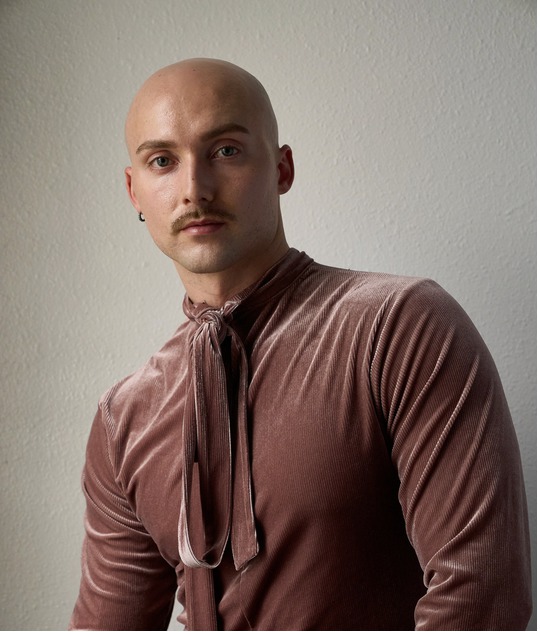
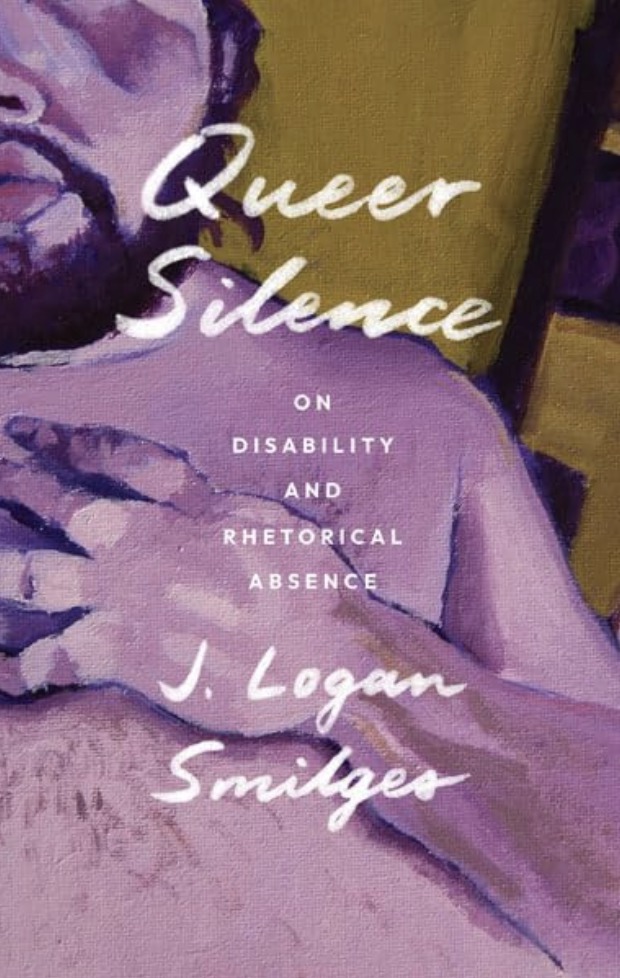
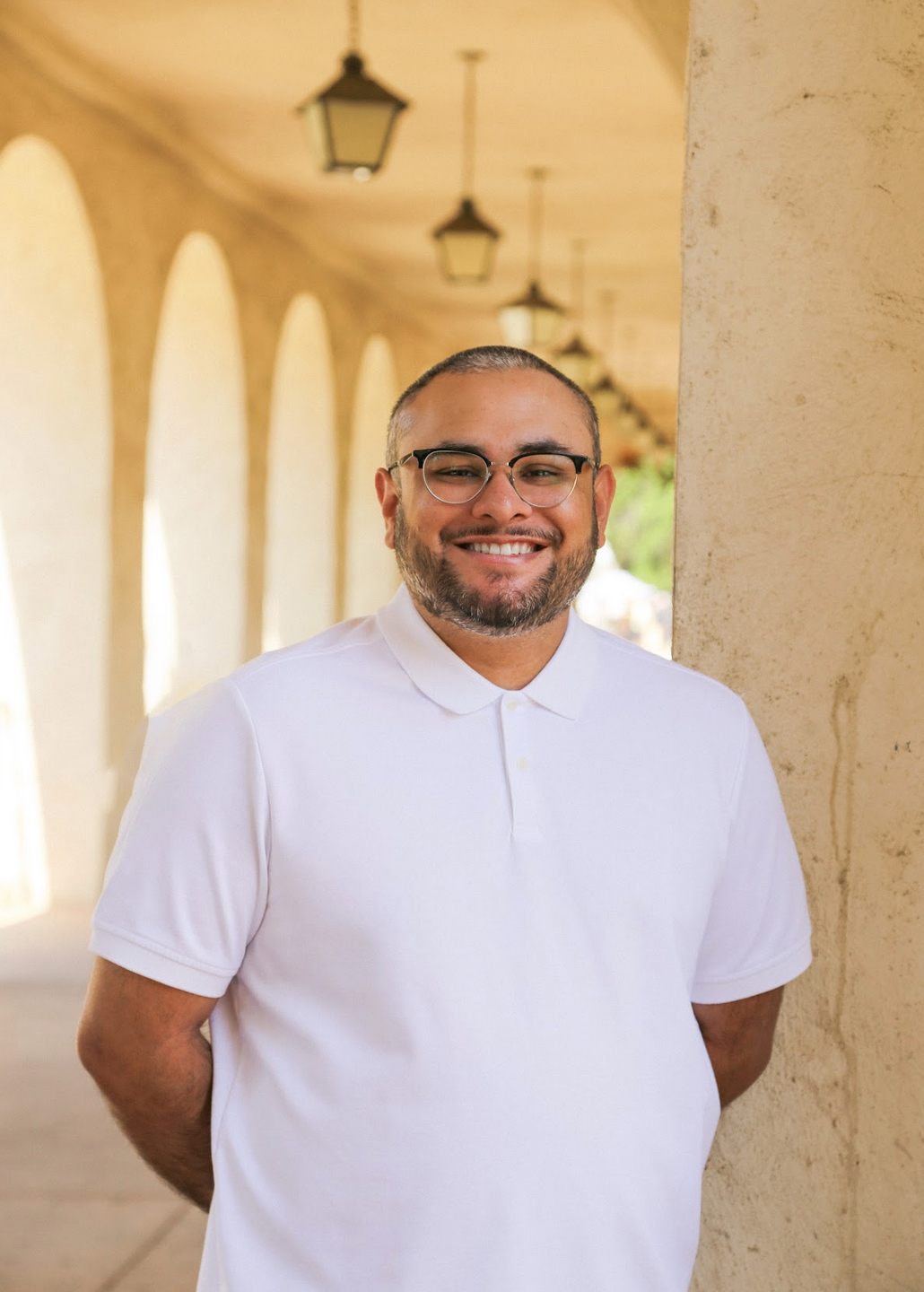
Interview Transcript with Dr. J. Logan Smilges
00:03 → 00:09 David Ornelas: So, Dr. Smilges. We know who you are, but what is your name and your research interests?
00:10 → 00:28 Logan Smilges: My name is Logan Smilges, and when I publish, I usually tack on the first initial of my first name J, and my research interests kind of hover around queer and trans disability studies, rhetorical studies, and the history of medicine.
00:29 → 00:40 David Ornelas: Although your queer silence on disability and rhetorical silence book was really big, how did that—what was your journey that sparked that? And then going into Crip Negativity, and the rest of your books?
00:41 → 00:47 Logan Smilges: Oh, goodness! Well, Queer Silence, my first book, was loosely based on my dissertation. I would say about 50% of my dissertation found its way into the book. And I note that because my dissertation was very much the culmination of a series of questions that led me to grad school to begin with. I spent a good deal of my adolescence in conversion therapy, which offered me a deeply harmful but nevertheless comprehensive framework to think about the relationship between sexuality and disability, and after finishing—and in many ways surviving—conversion therapy, I was left with a lot of questions about that relationship between, well, my own experience of sexuality and disability, notwithstanding the disabilities I have that are somewhat independent, or not necessarily as intimately connected to my sexuality.
00:47 → 05:20 Logan Smilges: And so I entered grad school really wanting to understand better what I experienced and how the language that we have to talk about disability and sexuality, particularly in relation, can shape what people experience on an embodied level of these kinds of identities. And so Queer Silence was an attempt to answer a lot of those questions, and in the dissertation—the first iteration of that project—I was really primarily focused on sexuality and thinking about how people within sexual minorities have to drum up strategies to survive that don't always seem or register to others as particularly radical or resilient, but nevertheless are highly effective at keeping people alive or keeping people safe. And then, when I finished graduate school and moved toward the book, I felt a lot more freedom to think a little more expansively about not only the relationship between queerness and silence, or sexuality and silence, but also disability—which, of course, is really the primary focus of the book iteration of the project. And since Queer Silence, I have continued to be really invested in questions about solidarity, questions about being together in difference, about coalition, because something that I learned in the process of writing Queer Silence was that the tension that we see in the historical record between queer people and disabled people is a persistent tension, one that continues to structure the relationship between queerness and disability on a kind of rhetorical level. But it's also one that has really deep implications for how queer disabled people understand themselves—how I understand myself—and so I have continued to write projects, to work on projects—including Crip Negativity and some of my work since then—that try to take really seriously the feeling of tension, the kind of embodied feeling of contradiction and discomfort that comes along with occupying either multiple communities or multiple identities that don't always get along as well as we would like them to.
05:20 → 05:46 David Ornelas: Not to cut you off, and I know Queer Silence is the focus of this, but I remember in reading the first chapter or so of Crip Negativity, you talk about your own experience in high school and the things you went through, and I wanted to touch base on that, because I feel that relates a lot to the queer silence and disability. The bodies you mentioned in your book for queer silence: How are they mediated through technology? Do bodies serve one or many purposes that you're conveying in your book?
05:48 → 07:11 Logan Smilges: Well, I think to answer that first question about bodies being mediated through or by technology requires that we really define what we mean by body and what we mean by technology. There is, of course, a chapter of that book—arguably the central chapter of that book—that's thinking about Grindr and as a technology that you know a number, that lots of users are negotiating their own bodiedness, embodiedness through. And in that chapter I claim or argue that that app, and particularly the kind of visuality of bodies on that app, is one of the important ways in which silence can be instrumentalized by queer people. As a way to modulate how much of ourselves we want to disclose at any given time. And that, regardless of how much we want to disclose, technologies such as Grindr—and I think there are lots of other examples we can include—
07:12 → 08:42 Logan Smilges: —allow folks to continue to be in community with one another, to at least some degree. And so I think more broadly, then, there's a way that technology allows a degree of togetherness that can often be inaccessible for people who occupy bodies that are heavily stigmatized, heavily marginalized, heavily surveilled, and thus encounter obstacles to gathering in community. Now that all said, I think there's also a degree to which technology doesn't only serve as a mediation between bodies but can also serve as an extension or essential component of bodies. And in this way, I'm thinking of forms of prosthesis, whether physical prosthesis through like technological limbs...
08:43 → 09:32 Logan Smilges: ...or hearing aids, or also through other forms of assisted communication that are also kind of technologically robust. So, in these cases, I would back away a little bit from thinking about technology as a mediation, and lean more into a kind of embodied extension, because for lots of disabled people, technology becomes a really intimate part of how they understand themselves. Folks like Alison Kafer and Jillian Vicea have written a lot about figures of crypt cyborgs that are such good examples of the real harmony that can take place between bodies and technology.
09:33 → 09:45 David Ornelas: You and I have been speaking, I think, since like 2021, and my master's thesis at SDSU was on Grindr, and I heavily resonated with what you wrote about in Queer Silence, especially the chapter on Grindr.
09:45 → 10:08 David Ornelas: What I wrote about in my thesis was the misconceptions that gay men have about other gay men while on Grindr in this digital space, where you don't know the person, you only see them through their profile picture and the bio they have, and whatever information they've included in that. Which leads into my next question, which is: through your writing, do you talk about queer digital spaces, and how do people embody them?
10:10 → 10:14 Logan Smilges: Can. Can you ask that, the the kind of tail end of that question, one more time?
10:14 → 10:21 David Ornelas: Yes. So, through your writing, you talk about current digital spaces, but how do they embody them?
10:22 → 10:25 Logan Smilges: How do people occupy these queer digital spaces?
10:25 → 10:26 David Ornelas: Yes.
10:27 → 11:28 Logan Smilges: Well, there's such a range, right? And I think this is one of the things that can make queer digital spaces, on the one hand, so promising and enlivening, and also deeply frustrating for people who use them. You know, it's so rare to encounter a queer person who's like, "I love the apps, the apps make me so happy, you know? I just can't wait to finish my day at work, sit down, and get on the apps!" Like nobody, nobody says that, right? Everyone is upset about the apps. No one likes them, and yet they are so widely popular. Now, I'll be honest with you. I actually have not used a queer dating app since, like 2017. It has been a long time since I have actively used them myself.
11:29 → 13:00 Logan Smilges: That said, they continue to shape my life because of how pervasively they're used in community, right? It is increasingly strange for queer people to meet one another IRL [in real life] for the first time, right? Even if it's not an app like Grindr, it'll be another app like Instagram or Tiktok. Social media, specifically, has become such a dominant way that people meet one another. And so, as a result, people bring lots of different expectations into these queer digital spaces. And I think this is what can often lead to the frustration that people feel, specifically on apps like Grindr, JACK'D, Tinder. Where the line between a sex app and a dating app can become a little blurry. It can be really not only confusing, but angering for some folks when another person is using the platform in a way that does not align with their own expectations for how they want to use the platform, or how they were hoping others will use the platform. And this, you know, this is no more clear...
13:00 → 14:12 Logan Smilges: ...this becomes no more evident than when you can read in people's bios their frustrations when they itemize all the things that they do or don't want from others who interact with them. Right? Sometimes they itemize certain physical characteristics, often in like deeply racist and problematic and ableist transphobic ways. But also, sometimes they will list expectations that aren't directly or explicitly linked to certain forms of embodiment but nevertheless set out expectations for how one presents themself visibly, authentically, comprehensively, on the platform. And if this is, you know, this starts to get into what I write about in Queer Silence about the kinds of profile pictures that people include. There's increasingly an expectation that people will show their face, that people will be transparent with their whole identity right up front. And when people fail to do that, when a user fails to do that, it can spark lots of feelings.
14:13 → 14:14 David Ornelas: Yeah.
14:14 → 14:14 Logan Smilges: From others.
14:14 → 14:39 David Ornelas: Both you and I know Grindr, I would say, is 99.9999% a hookup app. But, like you said, the way the men on the app try and embody who they are is maybe not who they really are, but maybe to attract other men. And then I also feel you go to other dating apps, like, for example, Hinge, and you have gay men on there. I think the premise of what men are looking for is completely different than what they're seeking on Grindr.
14:41 → 16:45 Logan Smilges: Absolutely. Well, and I think even when we call an app like Grindr "a hookup app," what a hookup entails is still so variable, you know, and for example, there are a lot of disabled people whose interest, and I guess this isn't even restricted to disabled people. But I'm thinking about disabled folks because of my own kind of community commitments. But for a lot of folks virtual sex is the most accessible form of sex. For them, or for, like, you know, for these folks like a hookup means sexting, right, whereas for other users they will complain about endless conversations. Right? It's like, when are we gonna meet? When are we gonna get to the point? Right? So even if we were to agree that Grindr is a hookup app, which I'm still not convinced everyone thinks it is, but even if we were to agree that Grindr is a hookup app, it still leaves us with so much room for disagreement. And I don't think disagreement is bad at all. What I think the reason that people are so frustrated, feel so intensely about difference on kind of or in queer digital spaces, is because they expect like homogeny, you know, they expect a kind of universal purpose for these spaces, which has always been strange to me. Because it is so counter to what queers have always been like when we gather. You know, we are always, just, we're defined by our difference. So, it should make sense that we're not going to be the same among one another. You know?
16:46 → 17:02 David Ornelas: Yeah. Do you incorporate your own lived experiences from your book or books, like Queer Silence, within your teaching? I don't mean, like not, "Do you, like, directly talk about Grindr in your classes," but do you talk about your own lived experiences in your teaching?
17:04 → 18:34 Logan Smilges: Yes, when relevant something I really stress to students at all levels is the importance of being able to articulate your position in relation to the topic at hand. Whether this is a conversation we're having, or an essay that we're writing, it's so essential that we're able to articulate the stakes of the of the topic for us. Right? Why do we care? Why are we interested? Why should we be trusted as an authority about XYZ? And in order to in order to state those stakes, I find it very useful to be transparent about my lived experiences. And I like that you use the phrase "lived experiences" rather than just "identities" because, as I write about pretty regularly, I'm very suspicious of the way that identity is increasingly used as a kind of synecdoche for politics. Right? Or used as synecdoche for authority on a particular topic. And that's not at all what I want to do when I position myself.
18:34 → 18:37 David Ornelas: How do you incorporate diversity and inclusion within your teaching?
18:38 → 18:40 Logan Smilges: Diversity and inclusion?
18:40 → 18:41 David Ornelas: Yeah, within your teaching.
18:43 → 20:01 Logan Smilges: Well, on a couple of different registers, one would be curricularly. It's really important to me that my syllabi not only include but center minoritarian voices on whatever I'm teaching. I predominantly teach disability studies and trans studies courses. And so within within those courses, I'm not only trying to present, you know, the category of disability or the category of transness as these kind of like monolithic silos, but trying to think intersectionally about folks who continue to be marginalized even within these communities, and then centering, or kind of trying to de-center those folks who consistently occupy most privileged positions within those communities. Right? So, in the disability studies course, for instance, it's important to me that I really center Indigenous, Black, crip of color voices.
20:01 → 21:39 Logan Smilges: Because as as you know well, if I [or] if any of us do not actively center those margins, then those margins continue to remain obsolete, or continue to remain voiceless in the conversation. So that's one way that I incorporate it, another way, though, pertains more to pedagogical strategies that I use. So I go to somewhat great lengths to design classroom activities that ask students to do the very work that I was just describing in response to the last question, about positioning themselves in relation to the topic. Right now, I'm teaching something of a history of transmedicine course, and I teach a version of this course every year, and one of the challenges that appears most regularly is that cisgender students who, just because of demographics, tend to be most of the students in the class. They don't know how to participate because they feel they feel as though the topic is so distant from their own lived experience.
21:40 → 23:21 Logan Smilges: I find that part of my responsibility as an educator is to really push students to think about categories like transness as an effect of systems of power rather than just as a kind of innate, essential identity, and so helping students to position themselves within sex/gender systems and be able to be able to help them see their own proximity to power, to articulate their own proximity to power, which, of course, is never a zero sum kind of game. All of us have kind of shifting proximities to power. That to me is like the goal, the central goal of teaching. Because if students are able to articulate their own position in the world, it is so much easier for them to understand their relationships with others, which can help them know when it's time to speak up, when it's time to take a back seat, when it's time to listen and learn. So I like to think that I'm thinking about diversity and inclusion, maybe not using those words per se, but thinking about the ideas related to diversity and inclusion on both the kind of curricular and pedagogical levels.
23:21 → 23:32 David Ornelas: You talk a lot about silence within your book. How can educators incorporate the concept of silence as a rhetorical strategy, both in writing and through communication and curricula?
23:36 → 25:25 Logan Smilges: Well, I think writing communication and curricula are kind of like all very different. So, silence is going to look different in each of those contexts, but one thing that perhaps links the three of them is the fact that I don't understand silence purely as verbal silence, and I certainly don't understand it purely as emptiness. But instead, I think about silence as a kind of multimodal absence, or it can appear across various modalities, and I also think about silence as gestural, right. So, the absence of one modality is always already a gesture toward the presence of another modality. And so across writing communication and curricula, then, I would really encourage educators to think about how, first, their own silences can create opportunities for other forms of presence. Right? Just as I was saying before, it's important that students learn when to listen, when to kind of sit down. It's also important, too, I think, for educators to be able to...
25:27 → 26:37 Logan Smilges: ...To not feel as though they have to speak on everything all the time, but actually kind of instrumentalize silence as a way of inviting forms of presence from students or from others. In my writing I like to think about silence with regard to my citation politics. You know, there are times when citation is such a beautiful way of not only like amplifying voices. But it's also a way of acknowledging our own authorial limits and say, like, this actually isn't a topic that I feel as though I have the authority to speak on by myself. And so I'm going to intentionally engage with citation as a way to bring in people who are experts or people who do have certain experiences so that they can kind of take on that role.
26:40 → 26:57 Logan Smilges: But again, trying to create something of a through line between writing communication and curricula I think it's really useful to emphasize silence's multimodality.
26:58 → 27:19 David Ornelas: I love that you don't just center it on just, like you said at the beginning of it, just being silence. It's much more than that, especially in academia. And you use that example of some students just sitting back and maybe just listening and speaking up when they feel you know they want to contribute and stuff like that. But I appreciate you saying that silence is beyond just being quiet in a space.
27:21 → 27:34 David Ornelas Shifting a little bit to online writing spaces, people do engage in silent discourse. With that being said, does this complicate our understanding of identity and rhetorical silence in digital spaces?
27:36 → 27:42 Logan Smilges: Could I ask you to to expand a little bit on what you mean by silent discourse?
27:42 → 28:00 David Ornelas: Yes, so I think I'm kind of referring also to again what you just said about silence within the classroom from cisgender students who maybe like, not that they don't relate to the curriculum being taught, but they just feel like there's a distance between them and the curriculum in the class. So that's silent discourse. That's kind of what I'm referring to.
28:01 → 28:07 Logan Smilges: Okay. So, folks who are participating in the discourse through their silence?
28:07 → 28:08 David Ornelas: Yeah.
28:08 → 29:27 Logan Smilges: Yeah. Okay. I mean, I think one of the one of the more challenging, one of the reasons that this question is challenging is that silence can mean so many different things, right? Especially when it's coming from students. Some students are going to be silent because they've learned what we want them to learn, which is that it's okay to not speak, right? And they're intentionally engaging silence as a way of allowing others to speak. And that's great, but there are other times when students engage silence because it comes from a place of discomfort, when it comes from a place of insecurity, it comes from a place of perceived deficit where they don't feel empowered to speak. They don't feel like they would be listened to, or maybe they're even afraid of forms of retribution or response, were they to speak. And so I think it's very important to always take silence in context.
29:28 → 30:14 Logan Smilges: It can be really dangerous, actually, to form kind of universal theories of what silence means. And this is one of the critiques that I offer in Queer Silence, of how a lot of the history of queer activism has been predicated on rather universal theories of silence as a bad thing. But of course, that assumption does a lot of real damage to the multiplicity of silences. You asked specifically about online writing spaces. Were you thinking about like social media?
30:15 → 30:24 David Ornelas: That. Yes, of course. And just online work that's done that students have to do like for class discussion boards or peer reviews, stuff like that.
30:25 → 31:34 Logan Smilges: Oh, my goodness! Well, what comes to mind with those examples? Like such as a discussion board? This is a great way to think about silence, not only as a kind of verbal absence, but as a kind of more multimodal gestural phenomenon. Because, as every teacher who has taught online is familiar, there are many students who will use a lot of words to say absolutely nothing, right? And this becomes all the more common as AI increasingly becomes commonplace. In students' kind of composition practices and so, while these forms of discoursing are not silent in the sense that they're absent, they do engage a kind of silence in so far as they withhold a lo of depth.
31:34 → 32:30 Logan Smilges: They withhold forms of engagement that we that we're hoping for from our students. And once again, I think that that withholding can mean a lot of different things. Sometimes, of course, students just don't want to do the work. That's not unique to students: All of us don't want to do our work sometimes, so I don't want to blame students too much for that. But it is the case. Sometimes students don't want to do the work other times. Other times, students have other priorities. Or, you know, or similar to in class, they're not convinced that, you know, pouring their heart into a response is going to to offer them much much good, you know. And I think...
32:30 → 33:39 Logan Smilges: I think we can learn a lot from students' kind of forms of disengagement online. I think maybe disengagement is a nice kind of corollary to silence because it can teach us. It can teach us as educators how our students are perceiving the work that we've assigned them, the value that they see in that work. And while sometimes students just need it explained to them why certain work is important to do, other times, I think, students can really be onto something that what we assign them to do is perhaps not as useful to them as we would like to think it is. And I think attending to their silences can be a really good kind of metric for us in that regard.
33:42 → 33:50 David Ornelas: Thank you. And staying on the topic of digital communication, early on in our interview, I did talk about how I wrote about Grindr in my thesis at SDSU.
33:51 → 34:39 David Ornelas: And I focus on the ideal body of men. How must they achieve love through the app? How do you see digital communication platforms like Grindr influencing the role of silence in queer and disabled rhetorics? To elaborate, because we talked early on about how Grindr is well known for a hookup app, and it may be like the misconception from other people like, well, you know, I found love on here, but others saying, you know it's just easy to meet with a guy within your area, and simple as that. But do you feel that influences the role of silence and queer and disabled rhetorics?
34:42 → 36:18 Logan Smilges: Well, I think that apps like Grindr, as a platform through which communication takes place,it provides certain conditions that structure the kind of silence that is possible. So, for example, Grindr makes it possible for some queer people to engage in visual or embodied silences that they could not engage through other forms of communication, particularly those that are IRL. Right? So there there are some ways in which Grindr makes more silence more possible, but there are other ways in which digital communication platforms like Grindr can also restrict people's capacity for silence or, yeah, restrict people's capacity for silence.
36:23 → 37:50 Logan Smilges: And I think a good example of this is folks who, because they choose to engage in a kind of visual silence or embodied silence, they find it much more difficult to, like, interact with other users on the app, right? They are like verbally silenced because no one responds to their messages, and I think that kind of that kind of silencing is not necessarily unique to the platform, because that also can occur IRL [in real life], where people just don't respond to you. It is nevertheless conditioned by the app. I guess what I'm trying to say is that I try to resist thinking about a single form of communication as either like good or bad, for silence, and more so, simply altering the forms of absence that are possible.
37:50 → 38:57 Logan Smilges: You know, in a club or in a gay bar, there are forms of silence that people can engage there, too, that are not possible on an app, you know. And one example that comes to mind for me is folks who are verbally silent, but are still dancing with people, and like making physical contact, and like making out. There are forms of embodied presence in person that require absolutely zero verbal communication, whereas on an app like Grindr there's always a verbal foreplay. Right? You gotta set it up. And so yeah, I like that your question uses the word "influence" like, how does it? How how do these platforms influence silence, rather than simply create or constrain.
38:58 → 39:22 David Ornelas: No, I really like that example because, like you said, you're in a club, and you're seeing someone in real life, where on Grindr you're talking to, you know, sometimes a blank profile. You don't even know who you're talking to, and like you said early on, that in itself is a form of talking amongst guys. So, I really like that. Thank you. And our last question...
39:22 → 39:29 David Ornelas: How do you see your work, present and future, intersecting with, emerging fields within fields like digital humanities?
39:30 → 41:18 Logan Smilges: Oh, goodness! I was afraid you were gonna ask me this one. Well, I don't know if that's good or bad. The reason I was afraid is because I'm not entirely certain I know what the digital humanities refer to. I think that I continue to be interested in the myriad ways that people adopt in order to stay together and increasingly, in this kind of like ongoing pandemic world. Where forms of fascism are kind of spreading globally in terrifyingly quick ways. Technology is a dominant way for people to stick together, for people to stay together. And so I find myself spending increasing amounts of time really studying and thinking about what certain digital platforms make possible and what they constrict or constrain, you know. Just as I was saying with in regard to your last question about the the role of silence on these platforms.
41:19 → 43:17 Logan Smilges: And something I've been trying to really work through in my head recently is what seems to be a kind of shifting era in the world of social media, where a lot of the platforms that digital communities have grown accustomed to using in the last decade are being abandoned. Platforms like Facebook, platforms like Twitter, potentially, platforms like TikTok, which continue to be legislated in ways that make their use very unreliable, you know, and it's also the case that in a lot of countries, platforms like Grindr are being heavily surveilled in ways that make them unusable for queer people. So I'm feeling as though we're in a really interesting moment where the way people are engaging technology to stay together is changing. And so, even though I don't feel as though I'm prepared to comment on the quality form of those changes, I do think it is an ongoing interest of mine. I think it's also worth noting, too, that an increasing number of young people are not using social media at all. You know, they've grown up with millennial parents who were always on their phones.
43:18 → 43:18 David Ornelas: Yeah.
43:19 → 43:59 Logan Smilges: And, you know, have decided to adopt a kind of Luddite aesthetic that, for very good reasons, just does not engage communication technologies in the same way. So I can't say for certain how my work is going to take up these changes. Admittedly, the the book projects I'm working on now are not connected to these changes, but I can assure you they are things that I'm aware of and thinking about, and will likely write about in the future.
44:01 → 44:04 David Ornelas: Awesome. Thank you so much for your time, Dr. Smilges.
44:04 → 44:08 Logan Smilges: Of course. I hope that my answers were helpful to you.
44:09 → 44:10 David Ornelas: They were.