| |
Many
early filmmakers wanted to simply capture selected moments
from the day, preferably moments filled with some type
of action that could not be adequately represented through
still photography or painting. The early motion picture
camera was considered to be a device to help us look
at life more closely, to help us slow motion down or
speed it up, to help us see our bodies and the world
around us in a new light. But it was also mainly seen
as a way to present action itself just for the sake
of showing action; this is perhaps why so many early
films resemble footage captured from a surveillance
camera.
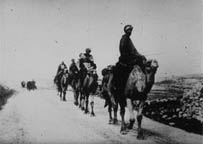
By the start of the 20th century,
cinematographs and other, more advanced motion picture
film cameras, had spread around the world, capturing
scenes of people engaged in the mundane details of their
lives. These images
of life in distant lands were brought back home and
projected to audiences that integrated these early Lumiere
Ghost images into their evolving visions of the world.
Storytellers also quickly became interested in the fact
that large, diverse audiences willingly paid to experience
this new medium.
|
|