 The playfulness of the early chapters is captivating, invigorating. The
give and take, the pushmepullya action, all of it engages the reader in ways
that vibrant, immediate electronic text does. I was thrilled to find
classical references in virtual scenarios. But then I wanted to take part
in the play, outside my head, a hands-on experience that I almost got to
experience while reading. Almost. And while there were many, many
virtual places, including those mentioned in the text, where I could go, I
wanted a special place, one just for those engaged with this text. I
wanted: A hypertextual, multimedia counterpart to
this (less) traditional published text. One that allowed the freedom to explore, play, create, construct, (re)envision. To look at. To look
through. To look beyond. To
play. To engage. One I could
participate in, co-author, or at least co-interpret. One that, like the energizer bunny, goes on and on and on and on....
The playfulness of the early chapters is captivating, invigorating. The
give and take, the pushmepullya action, all of it engages the reader in ways
that vibrant, immediate electronic text does. I was thrilled to find
classical references in virtual scenarios. But then I wanted to take part
in the play, outside my head, a hands-on experience that I almost got to
experience while reading. Almost. And while there were many, many
virtual places, including those mentioned in the text, where I could go, I
wanted a special place, one just for those engaged with this text. I
wanted: A hypertextual, multimedia counterpart to
this (less) traditional published text. One that allowed the freedom to explore, play, create, construct, (re)envision. To look at. To look
through. To look beyond. To
play. To engage. One I could
participate in, co-author, or at least co-interpret. One that, like the energizer bunny, goes on and on and on and on....
I think this book whetted my appetite, but didn’t leave me satisfied; I
wanted to spend hours surfing by clicking, not by turning pages. A PERFECT example of my salivation and (almost) salvation--my almost
satiated desire-- would be the final edited hypertextual MOO conversation
(annotated, no less!) in which the authors discuss the book, life, and
everything, then Mick Doherty and Sandye Thompson. I did get a bit weary of thumbing pages back and forth, and I couldn't
simply adjust the font size on my screen, so my eyes got tired. This
ending should have been virtual, linked.
Then maybe we could’ve heard
Mick’s songs. Why doesn’t such a companion
hypertext exist?
-beckster
Tschichold, Jan. The New Typography: A Handbook for Modern Designers. Trans. Ruari McLean. Berkeley: U California P, 1995.
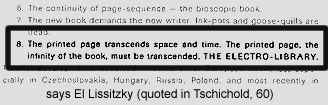
Image above courtesy of Anne Wysocki